 blog
Teeth Whitening for Sensitive Teeth: A Complete Guide
Table of Contents
- Why Whitening Causes Sensitivity: Enamel, Dentin, and Nerve Endings
- Teeth Whitening for Sensitive Teeth: Who Is a Good Candidate?
- Desensitizing Toothpaste for Whitening: Potassium Nitrate vs. Fluoride
- Professional Teeth Whitening vs. At-Home Kits: What Works for Sensitive Teeth
- How to Prevent Tooth Sensitivity After Whitening: A Step-by-Step Routine
- Ingredients to Avoid and Long-Term Enamel Health
- Troubleshooting Failed Whitening Attempts and Managing Post-Treatment Pain
- Frequently Asked Questions
Last Updated: September 29, 2026
Why Whitening Causes Sensitivity: Enamel, Dentin, and Nerve Endings
Teeth whitening for sensitive teeth starts with understanding why the process hurts. Whitening agents pass through the enamel, reach the dentin beneath it, and signal the pulp, where your nerve endings live.
How Hydrogen Peroxide and Carbamide Peroxide Reach the Pulp
Hydrogen peroxide and carbamide peroxide are the two active bleaching agents used in nearly every whitening product. Carbamide peroxide breaks down into hydrogen peroxide and urea once it contacts saliva.
Teeth Whitening for Sensitive Teeth: Who Is a Good Candidate?
The best candidate for teeth whitening with sensitive teeth is someone whose sensitivity comes from exposed dentin or thin enamel, not an untreated cavity, cracked tooth, or active gum disease. Those issues need care first.
Good candidates generally share a few traits:
- No untreated cavities or active gum irritation
- Enamel that hasn't been worn down by abrasive brushing
- Realistic expectations about how white teeth can safely get
- Willingness to use desensitizing products before and after whitening
When to Consult a Dental Professional Before Whitening
Talk to a dentist before whitening if you have persistent tooth pain, bleeding gums, a chipped or cracked tooth, or a crown, veneer, or filling on a front tooth. Whitening agents don't lighten restorations, so a crown can look mismatched next to whitened teeth.
Desensitizing Toothpaste for Whitening: Potassium Nitrate vs. Fluoride
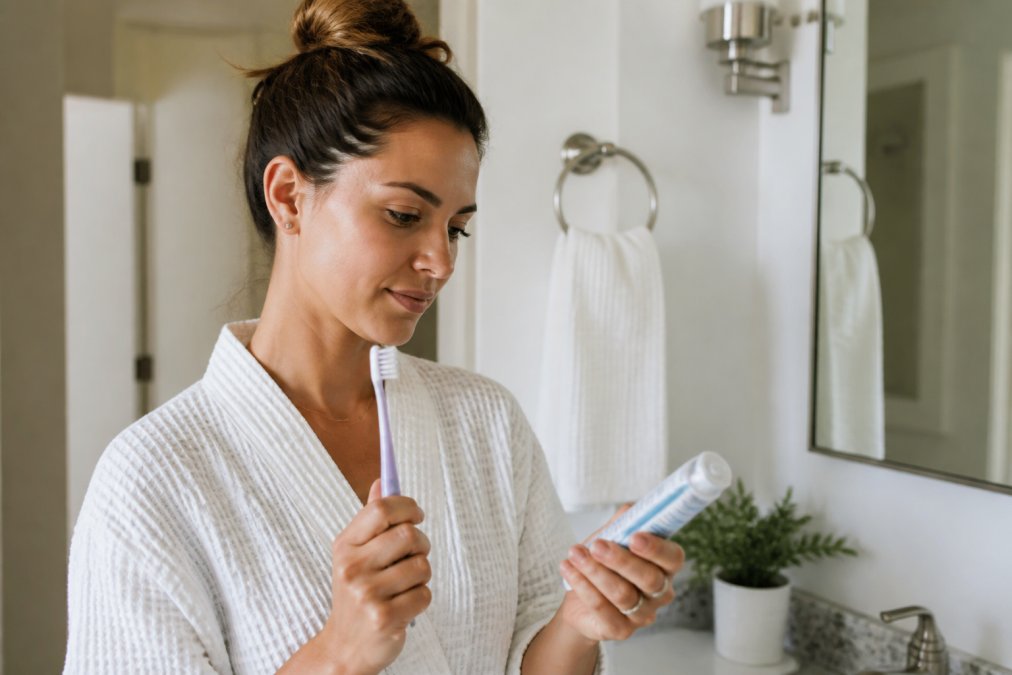
Desensitizing toothpaste for whitening works one of two ways: it quiets the nerve signal itself, or it blocks the microscopic channels in dentin that carry that signal to the pulp. Potassium nitrate and fluoride work on different parts of that pathway.
Other Desensitizing Agents Worth Knowing
Potassium nitrate and fluoride are the headline ingredients, but a few others appear regularly in sensitivity products and in gels dentists dispense around whitening:
- Stannous fluoride combines fluoride's remineralizing benefit with a physical occlusion effect: the tin ion plugs open tubules, working faster than sodium fluoride alone for some people. It can cause surface staining with long-term use.
- Arginine, combined with calcium carbonate, forms a plug over exposed tubules and works quickly.
- Calcium phosphate technologies (amorphous calcium phosphate, calcium sodium phosphosilicate) deliver raw minerals for remineralization directly to the tooth surface.
- Oxalate-based gels are applied in-office before whitening to occlude tubules and reduce peroxide penetration.
How to Choose and Sequence Them
- One to two weeks before whitening: start a potassium nitrate toothpaste twice daily to calm the nerve.
- During whitening: use a fluoride or stannous fluoride toothpaste to support remineralization between sessions.
- After whitening: continue the desensitizing toothpaste for at least a week, and use any dentist-provided desensitizing gel as directed.
One caution: desensitizing toothpaste manages the symptom, not the cause. If sensitivity persists after whitening stops, or appears on a single tooth rather than across the mouth, that points to something structural, a cracked tooth, a failing restoration, or gum recession, that toothpaste won't fix.
Professional Teeth Whitening vs. At-Home Kits: What Works for Sensitive Teeth
Professional teeth whitening vs. at-home kits comes down to control. In-office treatment uses higher concentrations, but a dentist can isolate the gums, manage application time precisely, and stop the moment a patient reacts. At-home kits trade that supervision for convenience.
| Option | Typical Concentration | Supervision | Best For |
|---|---|---|---|
| In-office treatment | Higher, dentist-applied | Direct, same visit | Fast results, significant staining |
| Custom trays | Moderate, dentist-made | At home, dentist-guided | Sensitive teeth, gradual whitening |
| Whitening strips | Lower, over-the-counter | None | Mild surface stains |
| Whitening toothpaste | Minimal, abrasive | None | Maintenance only |
How to Prevent Tooth Sensitivity After Whitening: A Step-by-Step Routine
Preventing sensitivity after whitening is mostly about preparation, pacing, and what you put in your mouth while enamel is most permeable. These steps work whether you whiten at home or in a dental office.
- Start desensitizing early. Begin a potassium nitrate toothpaste one to two weeks before whitening. The nerve needs time to depolarize; starting the morning of your first session does almost nothing.
- Whiten in shorter sessions. A 30-minute session twice a day is often gentler than a single 60-minute session, even at the same total exposure.
- Use a desensitizing gel in your trays before or after the whitening gel, if your dentist provides one. Applying it before the whitening gel can reduce how deeply peroxide penetrates.
- Skip extreme temperatures. Avoid very hot or very cold food and drinks for a few days. The tubules are more open, and thermal shifts are the most common trigger for a sharp twinge.
- Brush gently with a soft-bristled brush and non-abrasive toothpaste. Scrubbing harder does not whiten faster; it just wears enamel and exposes more dentin.
- Space out sessions. Give your teeth a day or two between whitening rounds. Back-to-back sessions compound irritation without speeding results.
- Don't whiten immediately after a cleaning or a dental procedure. Enamel is temporarily more permeable after professional scaling or polishing, and sensitivity is more likely.
The White Diet: A Dietary Protocol for the Whitening Window
What protects your results and comfort is a structured eating plan for the first 48 hours after each whitening session, sometimes called a 'white diet.'
- Coffee, black tea, and cola
- Red wine and dark beer
- Berries, cherries, pomegranate, and grape juice
- Tomato sauce, salsa, and ketchup
- Soy sauce, balsamic vinegar, and dark sauces
- Curry, turmeric, and heavily spiced dishes
- Mustard and other yellow condiments
- Dark chocolate
- Citrus fruits and juices (acidic, even when light in color)
- Sports drinks and energy drinks (acidic and often colored)
Foods and drinks that are safe during the window:
- Plain water, still or sparkling (sparkling is mildly acidic, so still water is gentler)
- Milk and plain yogurt
- White cheese, cottage cheese, and cream cheese
- Plain chicken, turkey, and white fish
- Eggs, tofu, and white beans
- Rice, pasta, and white bread
- Potatoes and cauliflower
- Bananas, peeled apples, and pears
- Vanilla ice cream and white cake
Practical habits that make the protocol easier:
- Drink staining beverages through a straw if you must have them, and rinse with water immediately after.
- Swish plain water after every meal to dilute acids and pigments.
- Use a fluoride or desensitizing toothpaste during the window, not a whitening toothpaste.
- Wait at least 30 minutes after acidic food or drink before brushing, since enamel is temporarily softened.
- Keep the window going for a full 48 hours after each session, not just the first day.
Pacing and Recovery
If you're whitening at home, a common pattern is a few days on, then a day off, rather than pushing through discomfort. Sensitivity that builds session over session is a signal to slow down. For in-office treatment, tell your dentist at the first sign of significant discomfort, they can adjust concentration, application time, or add a desensitizing step.
Ingredients to Avoid and Long-Term Enamel Health
Long-term enamel health depends on what you put on your teeth every day, not just during whitening. Abrasive whitening toothpastes wear down enamel over time, especially used aggressively. Once enamel is gone, it doesn't grow back.
Ingredients worth limiting:
- High-abrasive silica in whitening toothpastes used daily
- Acidic whitening rinses that soften enamel with frequent use
- Charcoal powders, which are abrasive and offer little proven whitening benefit (pubmed.ncbi.nlm.nih.gov)
- Baking soda scrubs used more than occasionally
Troubleshooting Failed Whitening Attempts and Managing Post-Treatment Pain
When whitening doesn't work, the cause is usually intrinsic staining, restorations that won't lighten, unrealistic expectations, or a product too weak to begin with. Intrinsic staining sits inside the tooth from tetracycline use or trauma and responds poorly to surface whitening agents. Extrinsic staining is much easier to lift.
For post-treatment pain, a few approaches help:
- Apply desensitizing gel as directed
- Take an over-the-counter pain reliever if your dentist approves
- Pause whitening for a few days and let the nerve settle
- Switch to a potassium nitrate toothpaste if you haven't already
Frequently Asked Questions
Can I do teeth whitening if I have sensitive teeth?
Yes, many people with sensitive teeth can whiten safely by choosing lower-concentration products, using desensitizing toothpaste for a couple of weeks beforehand, and taking shorter wear times. A dental professional can check for cavities or gum recession first, since those need treatment before whitening. If you have severe or persistent sensitivity, talk to a dentist about whether whitening is right for you.
Which teeth whitening is best for sensitive teeth?
There is no single best option, but professional whitening with custom trays and desensitizing gel is often easier on sensitive teeth because a dentist controls the peroxide concentration and application time. Over-the-counter whitening strips with lower hydrogen peroxide levels can also work if you build up gradually. Avoid high-concentration kits and abrasive whitening toothpastes, which can worsen sensitivity.
What ingredients should I avoid in whitening products if I have sensitive teeth?
Skip products with high concentrations of hydrogen peroxide or carbamide peroxide, especially those above what your teeth can tolerate. Also avoid abrasive ingredients like silica or baking soda in whitening toothpastes, which can wear enamel over time. Check labels for alcohol, which can dry out gums, and choose formulas with potassium nitrate or fluoride instead.
How can I manage tooth sensitivity during a whitening treatment?
Apply a desensitizing gel before or after whitening, use sensitivity toothpaste daily, and take over-the-counter pain relievers if needed. Keep whitening sessions short, and avoid very hot or cold foods right after. If sensitivity lasts more than a few days, stop whitening and see a dentist to rule out cracks or decay.