 ultimate-guide
How to Avoid Unnecessary Dental Work: A 2026 Guide
Table of Contents
- How to Avoid Unnecessary Dental Work: What You Need to Know
- Signs of Unnecessary Dental Work: Red Flags to Watch For
- Questions to Ask Before Dental Work: Your Decision Checklist
- How to Get a Second Opinion From a Dentist
- Understanding Your Dental Treatment Plan Explained
- Preventive Care and Regular Checkups: Your Best Defense
- Finding a Trustworthy Dentist You Can Rely On
- Frequently Asked Questions
Last Updated: October 19, 2026
How to Avoid Unnecessary Dental Work: What You Need to Know
Unnecessary dental work happens more often than you might think. The difference between a dentist who recommends a procedure and one who recommends prevention can cost you thousands of dollars and years of anxiety. At The Tooth Club, patients often arrive after recommendations elsewhere, unsure whether the work was truly necessary.
The good news: you have more control than you realize. Avoiding unnecessary dental work starts with knowing the red flags, asking the right questions, and building a relationship with a dentist you trust.
Signs of Unnecessary Dental Work: Red Flags to Watch For
Watch for dentists who recommend extensive treatment during your first visit. A trustworthy dentist understands your history, symptoms, and concerns before proposing a plan. If you're told you need multiple crowns, veneers, or cosmetic procedures without a clear explanation, question it.
Another red flag: pressure to proceed immediately. Legitimate treatment rarely requires a same-day decision. When a dentist pushes you to commit to expensive work before you can think or get a second opinion, pause. Preventive care should be the foundation of any recommendation, not an afterthought.
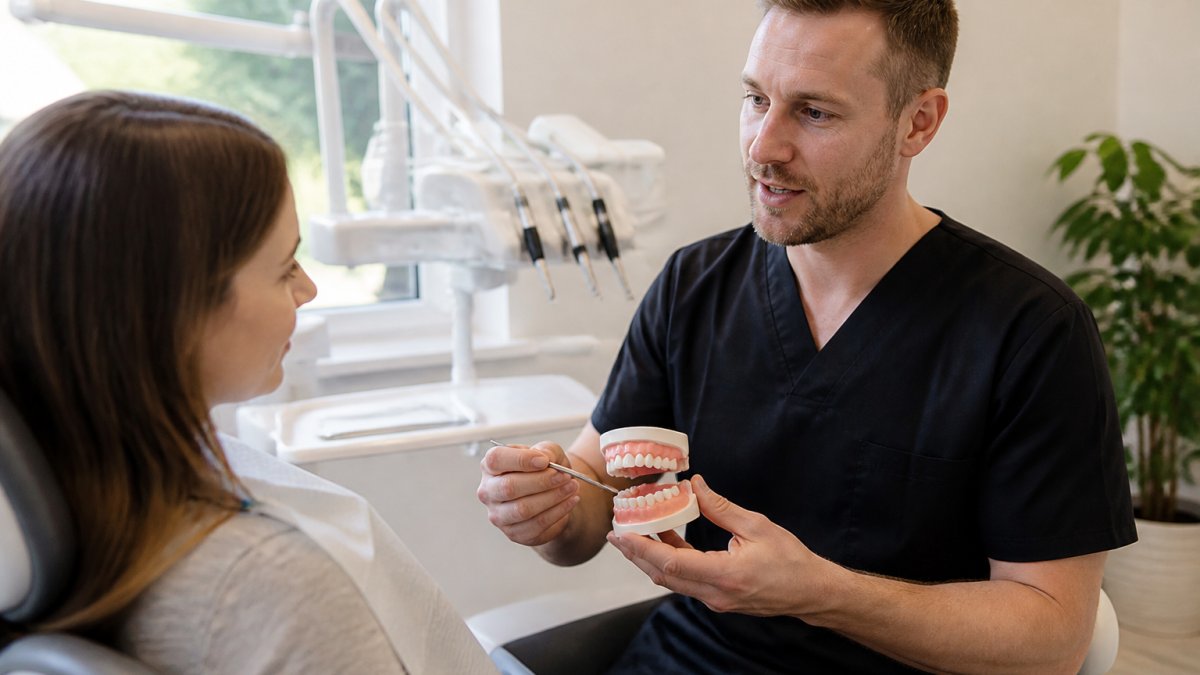
Pay attention to how the dentist explains your diagnosis. Are they showing you X-rays, photographs, or intraoral camera images, or simply telling you what you need? A dentist who shows the issue and explains the clinical evidence is more likely to recommend treatment you actually need.
Look for patterns across practices. If one dentist recommends a crown and another suggests monitoring, that's a genuine difference in clinical judgment. Neither is necessarily wrong, but understand the reasoning behind each.
Questions to Ask Before Dental Work: Your Decision Checklist
Before committing to any procedure, ask specific questions. Start with: "Why do I need this treatment right now?" A clear answer should reference your specific diagnosis, not general risk.
Ask about alternatives. For almost any dental issue, multiple approaches exist. If your dentist recommends a crown, ask whether a filling or bonding might work. If they suggest veneers, ask about whitening or orthodontics.
Request the clinical evidence: "Can you show me the X-rays or photographs that support this diagnosis?" Visual documentation helps you understand the problem and makes a second opinion easier.

Ask about risks and benefits. Every procedure carries some risk, sensitivity, complications, or future retreatment.
Finally, ask about cost upfront. Request an itemized estimate before treatment begins. If your dentist can't provide clear pricing or seems evasive, that's a red flag.
How to Get a Second Opinion From a Dentist
A second opinion is the most reliable way to separate genuine clinical need from an aggressive treatment plan, but only if you run it as a process.
Step 1: Request your records in writing. Under the HIPAA Privacy Rule, you have a legal right to a copy of your dental records, generally within 30 days of a written request (many states set shorter deadlines). Ask specifically for:
- Bitewing and periapical X-rays, plus any panoramic or CBCT images, in their original digital format (not screenshots)
- Chart notes documenting the diagnosis and the tooth numbers involved
- The written treatment plan with procedure codes and fees
- Intraoral photographs, if the practice took them
Send the request by email for a timestamp. A practice may charge a reasonable, cost-based copying fee, but it cannot refuse the request or withhold records until a bill is paid.
Step 3: Bring a one-page summary. List the recommended procedures, tooth numbers, the stated reason for each, the quoted fee, and any urgency claim.
Step 4: Ask the second dentist to answer four questions explicitly.
- Do the images and clinical findings support the diagnosis as described?
- Is the proposed treatment the least invasive option that addresses it?
- What is the reasonable range of time you could wait, and what would change if you did?
- If you disagree with the first plan, what specifically do you see differently?
Step 5: Handle disagreement without assuming fraud. Two honest dentists can reach different conclusions, especially on borderline cavities, hairline cracks, and "watch" areas. What matters is whether each can point to evidence.
What a second opinion should not cost you in trust. A dentist who resists records requests, discourages a second opinion, or implies you'll lose the tooth if you wait a week is telling you about the practice, not just the tooth. A confident clinician isn't threatened by patients seeking confirmation.
(Source: [your rights as a patient](https://www.hhs.gov/hipaa/for-individuals/guidance-materials-for-consumers/index.html))Understanding Your Dental Treatment Plan Explained
A treatment plan is a proposal, not a verdict. The skill worth building is reading one and deciding, procedure by procedure, whether the clinical evidence justifies it.
1. Diagnosis evidence. Every recommended procedure should trace to a specific finding: a tooth number, a surface, an image, and a symptom or measurable defect.
2. Clinical threshold. Not every finding needs treatment today. Common thresholds practitioners use:
- Early (incipient) cavities confined to enamel are frequently managed with fluoride varnish, sealants, and monitoring rather than drilling, especially in adults with low decay activity. Ask whether the lesion is into dentin or still in enamel, that distinction often changes the recommendation.
- Hairline cracks in a back tooth without symptoms are often watched; a crown becomes more defensible when the crack is symptomatic, extends below the gumline, or the tooth has already lost significant structure.
- Deep decay near the nerve may warrant a root canal, but a dentist should explain why a direct restoration or an indirect pulp cap is not appropriate.
- Gum disease is staged and graded; a recommendation for scaling and root planing should reference pocket depths and bone loss on the chart, not just "gum disease."
You do not need to memorize these numbers, but you should ask the dentist to state where your tooth falls relative to the threshold and why.
3. Alternatives, including doing nothing. For nearly every recommendation there is a conservative option, a definitive option, and a wait-and-monitor option.
4. Urgency, stated in time. "You need this right away" should translate into a specific window and consequence.
5. Written estimate and sequence. Request an itemized written plan with procedure codes, fees, and the order of treatment.
A quick decision checklist you can carry into the chair:
- Can the dentist show me the finding on an image or in my mouth?
- Is this the least invasive option that addresses it?
- What are the alternatives, including monitoring?
- What is the specific consequence and timeframe if I wait?
- Do I have an itemized written estimate with procedure codes?
- Have I had a second opinion for anything high-cost or irreversible?
If the answer to the first four questions is clear and documented, you are in good shape.
Preventive Care and Regular Checkups: Your Best Defense
The most effective way to avoid unnecessary dental work is prevention. Regular checkups and professional cleanings catch issues early, when they're simpler and cheaper to treat.
Brush twice daily with fluoride toothpaste and floss daily (the CDC). These habits remove plaque and prevent decay and gum disease. Consistent oral hygiene dramatically reduces the need for restorative work later, many procedures stem from problems better home care could have prevented.
Schedule checkups at least twice yearly. Your dentist can spot early decay, gum disease, or other issues before they become serious, and periodic X-rays reveal problems between teeth or below the gum line. Regular checkups cost far less than treating advanced problems.
Pay attention to what your dentist recommends during checkups. Fluoride treatments, sealants, and other preventive measures are usually worth considering, they strengthen teeth and prevent future decay. Unlike unnecessary cosmetic procedures, they're investments in long-term oral health.
Finding a Trustworthy Dentist You Can Rely On
The foundation of avoiding unnecessary dental work is finding a dentist you trust. Look for one who listens to your concerns, explains recommendations clearly, and respects your treatment preferences.
Check credentials and experience. Ask whether your dentist belongs to professional organizations like the American Dental Association, memberships suggest a commitment to continuing education and ethical standards.
Read patient reviews critically. Look for patterns: Do patients mention feeling rushed? Do they praise communication? Were their concerns taken seriously?
Pay attention to your first visit. Do they take time to learn your dental history? Do they explain procedures before performing them? Is the staff unhurried and willing to answer questions?
Trust your gut. If something feels off about a dentist or practice, pay attention. A dentist who makes you feel comfortable, heard, and respected is more likely to provide ethical, necessary care.
Protecting your smile means taking an active role in your dental care. When you're ready for dental care where your concerns are heard and your treatment plan is explained thoroughly, request an appointment with The Tooth Club.
Frequently Asked Questions
Do some dentists recommend unnecessary dental procedures?
Yes, overtreatment happens in dentistry. Some dentists may recommend procedures that aren't clinically necessary, often driven by financial incentives or differing clinical judgment. This is why getting a second opinion, asking detailed questions about why a treatment is needed, and understanding your diagnosis through X-rays or photos matters. A trustworthy dentist explains their reasoning clearly and respects your right to decline or delay non-urgent treatment.
What questions should I ask before agreeing to a dental procedure?
Ask why the treatment is necessary, what happens if you delay it, what alternatives exist, what the risks and benefits are, and how much it will cost. Request to see the X-rays or photos showing the problem. Ask whether the treatment is urgent or preventive. A good dentist welcomes these questions and takes time to explain your options without pressure. If you feel rushed or dismissed, that's a red flag to seek a second opinion.
How can preventive dental care help me avoid more expensive treatment?
Regular checkups, professional cleanings, and good oral hygiene catch problems early when they're simpler and cheaper to treat. Cavities caught in their early stages need small fillings; untreated, they become large cavities requiring crowns or root canals. Gum disease caught early responds to cleaning and better brushing; advanced gum disease may need surgery. Preventive care also slows tooth decay and enamel loss, reducing the need for cosmetic or restorative work later.
When should I get a second opinion from another dentist?
Get a second opinion before any major procedure like crowns, root canals, extractions, or multiple fillings, especially if the cost is high or the treatment feels urgent. You should also seek a second opinion if you feel pressured, if the diagnosis doesn't match your symptoms, or if you're uncomfortable with your current dentist's explanation. Most dentists respect second opinions and will provide your records and X-rays to support your decision.
Can I ask my dentist to explain my X-rays and photos to me?
Absolutely. You have the right to see your X-rays, intraoral photos, and any imaging used to diagnose your condition. A good dentist will show you what they see, point out the problem area, and explain what it means. This transparency helps you understand why treatment is recommended and gives you the information you need to make an informed decision or seek a second opinion confidently.
What should I do if I feel pressured to get dental treatment?
Stop. A trustworthy dentist respects your timeline and concerns. If you feel rushed, dismissed, or pressured to decide immediately, ask for time to think it over, request your records, and seek a second opinion elsewhere. Pressure tactics, like urgency language, dismissing your questions, or refusing to show you diagnostic images, are warning signs. Your comfort and informed consent matter more than any single procedure.