 how-to
Finding a Judgment-Free Dentist: A How-To Guide
Table of Contents
- What Judgment-Free Dentistry Really Means
- Finding a Dentist for Dental Anxiety in Your Area
- Questions to Ask a New Dentist Before You Book
- How to Talk to a Dentist About Dental Anxiety
- What to Expect at a Judgment-Free Dentist
- Cost, Insurance, and Accessibility: Making Care Affordable
- Getting Back on Track After Years Away
- Conclusion: You Deserve Care Without Judgment
- Frequently Asked Questions
Last Updated: October 10, 2026
What Judgment-Free Dentistry Really Means
Judgment-free dentistry is dental care built around one promise: no lectures, no guilt, and no shame about the state of your teeth. At The Tooth Club, we built our practice around that idea.
Dental fear is common: many people put off care for years, and the longer they wait, the harder it feels to walk in. Judgment-free care breaks that cycle.
Here's what it looks like in practice:
- A dentist who asks what you want to change, not why you let things slide
- Plain answers about cost and treatment options before anything begins
- A team that moves at your pace, including breaks when you need them
The American Dental Association's patient resources echo this patient-centered approach. Good care starts with listening.
Finding a Dentist for Dental Anxiety in Your Area
Finding a judgment-free dentist starts with a short list, not a long search. Look for practices that mention nervous patients, comfort measures, or gentle dentistry on their own websites.
Most guides skip the hard part: how to check a practice without setting off your own anxiety. Here's the process we'd use.

Step 1: Research Local Practices Without Triggering Yourself
Set a 15-minute limit. Open a few practice websites and look for:
- A page that talks about anxious patients
- Photos of a calm, modern office
- Clear notes on payment and membership options
Write down two or three names. Then close the laptop. That's enough for today.
Step 2: Use a Short Phone Script to Test the Front Desk
The front desk tells you almost everything. Call and say:
"Hi, I have some dental anxiety and I've been away from the dentist for a while. I'm looking for a practice that won't make me feel bad about that. Is that something you handle?"
Listen for warmth, not just answers. If they rush you or sound annoyed, cross them off. If they slow down and ask what would help you feel comfortable, that's your sign.
Questions to Ask a New Dentist Before You Book
The best questions to ask a new dentist cover comfort, cost, and communication. Ask them before you book, not after you're in the chair, a practice that welcomes them is usually worth trusting.
Use this list:
- What do you do for patients with dental anxiety?
- Can I pause an appointment if I need a break?
- Do you offer payment plans or a membership plan?
Write the answers down. If a practice dodges the money questions, that's your answer too. According to CMS guidance on patient rights and informed consent, you have the right to clear information before you agree to care.
How to Talk to a Dentist About Dental Anxiety
Telling a dentist about your fear is easier when you plan it in advance. You don't need a speech, one honest sentence at the start of the visit changes how the whole appointment runs.
Try one of these:
"I get anxious at the dentist. Can you tell me what you're doing before you do it?"
"I haven't been in a few years and I'm nervous. I'd rather hear things slowly."
"I might need to stop for a minute. That doesn't mean I want to leave."
A good dentist will thank you for saying it.
What to Expect at a Judgment-Free Dentist
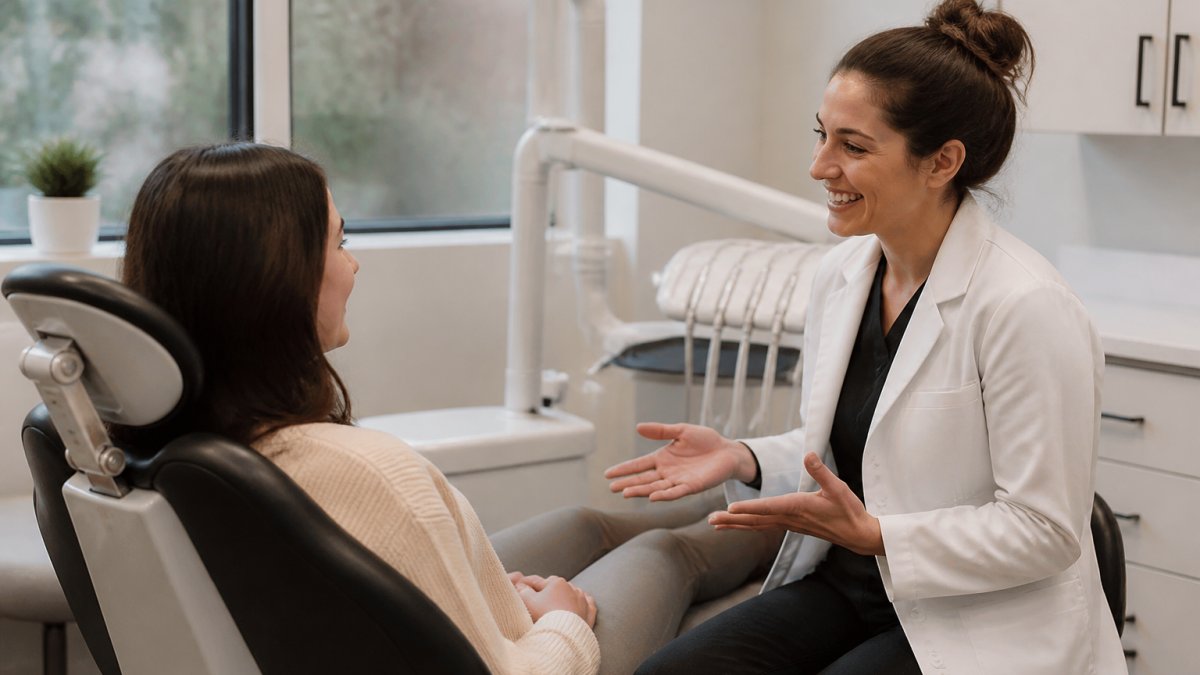
A first visit at a judgment-free practice is mostly talking: the dentist reviews your history, listens to your goals, and looks at your teeth, with treatment coming later once you've agreed on a plan.
First Appointment Walkthrough
- Greeting: Staff introduce themselves by name and ask how you're feeling, not just whether your paperwork is done
- Conversation: You share your concerns and any past bad experiences; the dentist listens without interrupting to diagnose
- Exam: A gentle check of teeth and gums, explained as it happens, "I'm looking at your back molars now"
In genuinely nonjudgmental practices, the exam is offered, not assumed. You can stop after the conversation and reschedule the exam for a second visit, a reasonable request, and a practice that welcomes it is telling you something.
How to Know If a Practice Is Genuinely Nonjudgmental
Marketing language is cheap. Observable behavior is not. Watch for these signals during the first call and visit:
- How they handle overdue care. A nonjudgmental practice asks when your last visit was and moves on. A judgmental one repeats the number back to you, "five years?", or narrates the consequences before asking what you want.
- How they present findings. They describe what they see and offer options. They do not open with a list of everything wrong or use words like "neglect."
- How they obtain consent. They explain a procedure, name the cost, and wait for your yes. They do not start treatment and bill later.
A practice that says "we're judgment-free" but then lists everything wrong with your mouth in the first five minutes isn't judgment-free. Words are cheap. Watch how they deliver findings, and watch whether they ask before they deliver them.
Accommodations You Can Ask For
Judgment-free care overlaps with trauma-informed and sensory-aware care, and you can request specific accommodations rather than hoping they're offered. Most are free and take seconds to arrange:
- Sensory: Ask for a quiet room, dimmed overhead light, a weighted or heavy blanket, sunglasses to block the exam light, or unscented products if fragrance is a trigger. Some practices keep noise-canceling headphones on hand.
- Pacing: Ask for a hand-raise stop signal, a scheduled break partway through, or a shorter first appointment that ends before you're depleted.
- Communication: Ask the dentist to narrate each step before doing it, to avoid surprise instruments, or to use a written summary if talking is hard in the moment.
None of these requests should require an explanation. "I'd like the overhead light off" is a complete sentence, and a practice that treats it as one is the practice you're looking for.
Cost, Insurance, and Accessibility: Making Care Affordable
Money worries keep as many people away from the dentist as fear does, yet most guides on judgment-free dentistry skip this entirely, and the cost conversation is where judgment often shows up first. A practice that answers money questions warmly usually answers clinical questions the same way.
If you don't have traditional dental insurance, you have more options than the search results suggest. Here's how the main ones work.
How the Common Payment Paths Work
- Traditional dental insurance. Most plans cover preventive care (exams, cleanings, routine X-rays) at or near 100%, basic care like fillings at a percentage, and major care like crowns or implants at a lower percentage, often after a deductible. Plans typically run on a calendar-year maximum, so unused benefits do not roll over. If you have coverage, ask the front desk to run a benefits check before your visit so you know what's covered.
- Membership or in-house plans. You pay a flat annual or monthly fee directly to the practice, and it usually bundles two cleanings, exams, and X-rays, plus a discount on other treatment. This is common for people without insurance, including self-employed workers and small business owners. Ask what the discount percentage is, whether it applies to labs and specialists, and whether the fee is refundable if you move.
- Third-party payment plans. These are financing arrangements, often through a separate company, that split a treatment cost into monthly payments. Ask whether interest is charged, whether a credit check is required, and what happens if you pay it off early. A zero-interest promotional period is not the same as a zero-interest loan, read the terms.
Questions That Get You a Real Number
Vague answers are a warning sign. Ask these before you agree to anything:
- What's included in a membership plan, and what's billed separately?
- Are cleanings and exams covered, or is there a limit per year?
- What do common treatments cost, a filling, a crown, an extraction?
A written estimate is the single most useful document you can leave with: procedure codes, the practice's fee, expected insurance payment, and your estimated out-of-pocket amount. If a practice won't put numbers in writing, that is your answer.
Accessibility Beyond the Bill
Cost is one barrier; access is another. Ask about these before you book:
- Hours: Early-morning, evening, or weekend appointments for people who can't take time off work.
- Location and transit: Whether the office is on a bus or rail line, and whether parking is free or validated.
- Physical access: Step-free entry, accessible restrooms, and whether the treatment chair can accommodate mobility devices.
For coverage rules and consumer protections around dental benefits, the U.S. Department of Labor's dental benefits guide is a useful starting point. Costs vary by practice and treatment, so always ask for a written estimate before you agree to anything, and treat the willingness to provide one as part of the judgment-free test.
Getting Back on Track After Years Away
Returning to care after a long gap is more common than you'd think, and rarely as bad as people fear. The first visit is usually an exam and a conversation; from there, your dentist can build a plan in stages, starting with the most urgent item.
A few things help:
- Book a morning slot if you have more energy then
- Bring a list of your questions
- Ask for a written treatment plan with costs
There's no prize for waiting, and no penalty for coming back. You're just a patient who showed up.
Conclusion: You Deserve Care Without Judgment
The hardest part of finding a judgment-free dentist is the first phone call. After that, it's just appointments.
At The Tooth Club, we offer a welcoming, zero-judgment environment with real conversations about your goals. Our dentist-owned practice in Norman, Oklahoma provides comprehensive care in one place, from cleanings and fillings to crowns, veneers, clear aligners, and implants.
Request an appointment with The Tooth Club and take the first step back toward a smile you feel good about.
Frequently Asked Questions
How can I tell if a dentist is nonjudgmental before I book?
Call the office and ask directly: 'I have dental anxiety and haven't been in a while. How do you handle nervous patients?' Listen for a calm, specific answer. Ask if they offer comfort measures like blankets, headphones, or sedation options. Check their website for language about patient comfort and open communication. If the receptionist sounds rushed or dismissive, that's a sign. A truly judgment-free practice will welcome the question and explain their approach without making you feel like a burden.
What should I say when I call a dentist about dental anxiety?
Keep it simple and honest: 'I have dental anxiety and it's been a long time since my last visit. I'm looking for a dentist who won't lecture me.' You can also say, 'I need a dentist who can go slowly and explain things before doing them.' This sets the tone and lets the front desk know how to support you. A good practice will thank you for telling them and may offer a longer appointment or a pre-visit tour. You don't owe anyone an apology for your fear.
What happens at a first visit with a judgment-free dentist?
At a judgment-free dentist, the first visit usually starts with a conversation, not a lecture. You'll discuss your dental history, fears, and goals. The dentist will explain what they see and offer treatment options without pressure. You can ask questions and take breaks if needed. Many practices offer a tour of the office, comfort items like headphones, and a clear treatment plan with costs upfront. The focus is on building trust and helping you feel safe, not on shaming you for past gaps in care.
How can I find a dentist if I feel embarrassed about my teeth?
Start by searching for 'judgment-free dentist' or 'dentist for dental anxiety' in your area. Look for practices that mention compassionate care, nervous patients, or sedation dentistry on their websites. Read reviews from other anxious patients. When you call, say upfront that you're embarrassed and need a gentle approach. A good office will reassure you and may schedule extra time for your first visit. Remember, dentists see patients with overdue care every day; they're there to help, not judge.