 how-to
Dental Care for Busy Parents: Simple Family Routine
Table of Contents
- A Family Dental Care Routine That Fits Real Life
- Kids' Brushing and Flossing Routine by Age
- Quick Oral Hygiene Tips for Hectic Weekdays
- Building a Family Dental Checkup Schedule
- Handling Dental Anxiety and Nerves as a Family
- Cost, Insurance, and Appointment Logistics for Busy Families
- When to Seek Urgent Dental Care
- Frequently Asked Questions
Last Updated: October 5, 2026
A Family Dental Care Routine That Fits Real Life
Dental care for busy parents works best when it is short, repeatable, and split between morning and night. The American Dental Association recommends brushing twice a day with fluoride toothpaste and cleaning between teeth once daily, so build the routine around those two anchors and let everything else flex.
We hear the same thing from parents every week: the routine is fine on paper, then a school run blows it up. So keep it small. A full family dental care routine takes about four minutes per person per day, not twenty.
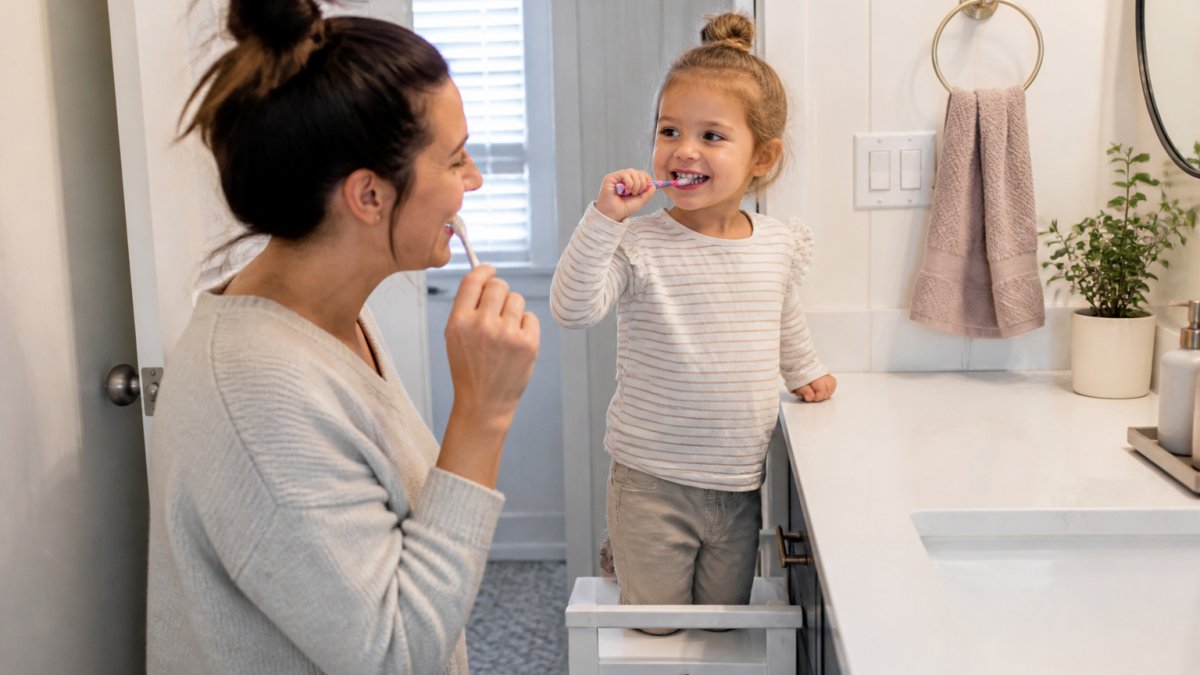
What a Complete Daily Routine Actually Includes
A complete routine has four parts, and only two of them happen at the sink:
- Morning: brush for two minutes with fluoride toothpaste
- Evening: brush again, then clean between teeth
- Daily: drink water instead of sugary drinks
- Weekly: check gums for redness, bleeding, or swelling
That is it. Most families fail because they try to add more, not because they skip the basics.
Kids' Brushing and Flossing Routine by Age
Kids need help far longer than most parents expect. Children generally lack the fine motor control to brush well alone until around age 8, so plan on supervising and finishing the job yourself before then.
The American Academy of Pediatric Dentistry guidance on infant oral care recommends starting oral care within the first days of life, wiping gums with a damp cloth before any teeth appear.
Age-by-Age Supervision Milestones
| Age | What They Do | What You Do |
|---|---|---|
| 0-2 | Nothing alone | Wipe gums with a damp cloth; brush first teeth for them |
| 3-5 | Hold the brush | Brush for them, twice daily, using a smear of fluoride toothpaste |
| 6-8 | Brush with help | Supervise, then finish the back teeth yourself |
| 9+ | Brush and floss alone | Check in weekly; watch gum health |
Flossing usually starts when two teeth touch, which often happens around age 2 to 3. For little ones, floss picks are easier than string.
Quick Oral Hygiene Tips for Hectic Weekdays
Most oral hygiene advice assumes a calm morning. Real mornings have a lost shoe, a permission slip, and a child who suddenly cannot find their left sock. The tips below are built around that reality: short, timed, and sequenced so nothing depends on memory or motivation.
The Four-Minute Morning Block
Total time: about four minutes per person. Run it in this order so the longest step overlaps with something you are already doing.
- Minute 0-1: Everyone brushes with fluoride toothpaste. Two minutes is the target, but if you only get one clean minute on a chaotic day, that still beats skipping.
- Minute 1-2: Spit, do not rinse. Rinsing with water washes away the fluoride that keeps working after you leave the sink.
- Minute 2-3: Clean between teeth. Floss picks for kids, string floss or a water flosser for adults.
- Minute 3-4: Quick gum check in the mirror. Look for redness, puffiness, or bleeding at the gumline.
If a child is under 8, add one minute for you to finish the back teeth yourself. That brings the block to about five minutes for the youngest kids.
The Three-Minute Bedtime Block
Bedtime is shorter because there is no rush to leave the house, but there is also less patience.
- Minute 0-2: Brush with fluoride toothpaste.
- Minute 2-3: Clean between teeth and spit.
No rinsing, no snacks after, and no negotiating. The last thing on teeth before sleep sits there for hours, which is why the bedtime brush matters more than the morning one.
Cut Decisions, Not Steps
A common pattern among families who stick with the routine is that they remove choices rather than shorten the routine:
- Same order every time. Brush, spit, floss, check. Kids stop asking what comes next.
- Brushes laid out the night before. One less morning decision.
- A two-minute timer or a song. Removes the "am I done?" negotiation.
- Brush while the shower warms up. Converts dead time into a habit you never forget.
- A second toothbrush and floss downstairs or in the car. Parents who remove the "walk upstairs" step report far fewer skipped nights.
When the Schedule Falls Apart
Travel, shift work, split households, and sick days break routines. The recovery rule is simple: if a night gets skipped, brush first thing in the morning and get back on track that day. One missed night is not a crisis. A missed week is.
For split households, agree on one routine both homes follow. Kids do better with the same sequence in both places, and it removes the "but at Mom's house we..." debate.
Never let a child skip brushing after a sugary snack and then go straight to bed. That is the combination most likely to cause tooth decay, because sugar sits on the teeth for hours.
Building a Family Dental Checkup Schedule
A family dental checkup schedule is easier when everyone goes at once. Book back-to-back appointments in a single block, ideally twice a year for cleanings and a dental exam. Block scheduling means one trip, one waiting room, and no separate calendar juggling.
The CDC overview of oral health and preventive care notes that regular checkups and professional cleaning catch problems like cavities and early gum disease before they hurt.
A Booking Sequence That Actually Works
- Pick a month that is already memorable. A birthday month works well because you already think about it.
- Call once and book the whole family in one block. Ask for the first or last appointment of the day to cut waiting-room time.
- Set a phone reminder two weeks before, and a second one the day before.
- Ask about sealants for back teeth at the same visit. Sealants are a preventive treatment that can be applied during a routine cleaning.
- Ask about fluoride varnish for kids at the same visit if the office recommends it.
Cost, Insurance, and Access
Cost is the number one reason families delay care, and self-employed parents often have no dental insurance at all. Two paths exist: traditional dental insurance, or a membership plan through a dental office.
- Traditional insurance usually covers preventive visits at or near 100 percent, with a deductible and annual maximum for other treatment. Check whether your plan uses a network and whether the office is in it.
- Membership plans typically bundle cleanings, exams, and X-rays into a monthly or annual fee, with discounts on other treatment. Exact pricing depends on the plan and the practice, so ask the office directly for current rates.
- No insurance and no membership means paying out of pocket per visit. Ask what a cleaning and exam costs before you book, not after.
For families without insurance, membership plans often make budgeting simpler than paying per visit, because the preventive care is already paid for.
Questions to Ask Before You Book
- Does the practice handle family appointments in one block?
- What is the out-of-pocket cost of a cleaning and exam for each family member?
- Are sealants and fluoride varnish covered, and at what age does coverage start?
- What is the cancellation policy, and is there a fee for a missed appointment?
- Does the office offer early-morning or evening slots for working parents?
Handling Dental Anxiety and Nerves as a Family
Dental anxiety is common, and kids learn it from us. If a parent dreads the chair, a child usually will too. The fix starts with language: avoid words like "hurt," "shot," or "drill," and describe a checkup as a look and a count.
For adults with real fear, tell the office before the visit. A good practice will explain each step, agree on a signal to pause, and never rush you. We built our whole approach around that: clear explanations, no judgment, and time to talk through what you need.
Cost, Insurance, and Appointment Logistics for Busy Families
Cost is the number one reason families delay care, and self-employed parents often have no dental insurance at all. Two paths exist: traditional insurance, or a membership plan through a dental office.
Membership plans typically bundle cleanings, exams, and X-rays into a monthly fee, with discounts on other treatment. Exact pricing depends on the plan and the practice, so ask the office directly for current rates. For families without insurance, membership plans often make budgeting simpler than paying out of pocket per visit.
Logistics matter just as much:
- Ask for the first or last appointment of the day to avoid waiting
- Confirm whether the practice handles family appointments in one block
- Ask what a visit costs before you book, not after
When to Seek Urgent Dental Care
Some problems cannot wait for a routine visit. Call a dentist the same day if you see:
- Facial swelling or swelling around the eye
- A tooth knocked out or badly broken
- Bleeding that will not stop
- Severe pain that wakes a child at night
- A fever paired with tooth pain
Swelling and fever together suggest infection, which can spread. Do not wait a week to see if it settles.
Frequently Asked Questions
How can busy parents make time for daily dental care?
Attach brushing to routines that already happen, like after breakfast and before bed. Keep supplies visible on the counter so no one has to hunt for a toothbrush. A two-minute timer helps kids stay on track without a parent standing over them. For flossing, pick one time of day and stick with it. Small, consistent habits beat long, occasional sessions.
What should a family's daily dental care routine include?
Everyone should brush twice a day with fluoride toothpaste for two minutes, and clean between teeth once a day. Adults can use floss or interdental brushes; kids may need help until their technique is steady. Limit sugary drinks and snacks between meals, and drink water after eating. A family dental care routine works best when it is simple enough to repeat every single day.
How often should children and adults visit the dentist?
Most children and adults benefit from a dental checkup and professional cleaning every six months. Your dentist may suggest a different schedule based on cavity history, gum health, or orthodontic treatment. A family dental checkup schedule that blocks everyone's visits together saves time and keeps nobody's appointment from slipping. Ask your dental office about scheduling family members back-to-back.
What are quick ways to care for your teeth when you're away from home?
Rinse with water after meals or sugary drinks, and chew sugar-free gum if you cannot brush. Keep a small travel dental kit with a backup toothbrush, fluoride toothpaste, and floss in your bag or car. If brushing is impossible, drinking water and avoiding sticky snacks helps reduce plaque buildup until you get home. These quick oral hygiene tips take under a minute.
Small habits beat perfect ones. Brushing twice, flossing once, and keeping a steady checkup schedule will do more for your family's smiles than any complicated system. If appointments feel like one more chore, The Tooth Club makes them feel easy: comprehensive care in one place, clear explanations, and a zero judgment environment for nervous parents and kids alike. Request an appointment with Dr. Chandler McPhail and get your family's routine back on track.